Active Directory minimization is becoming one of the most important identity strategies for modern enterprises.
Organizations are no longer asking:
“Can Microsoft Entra ID coexist with Active Directory?”
They are asking:
“How much Active Directory do we actually still need?”
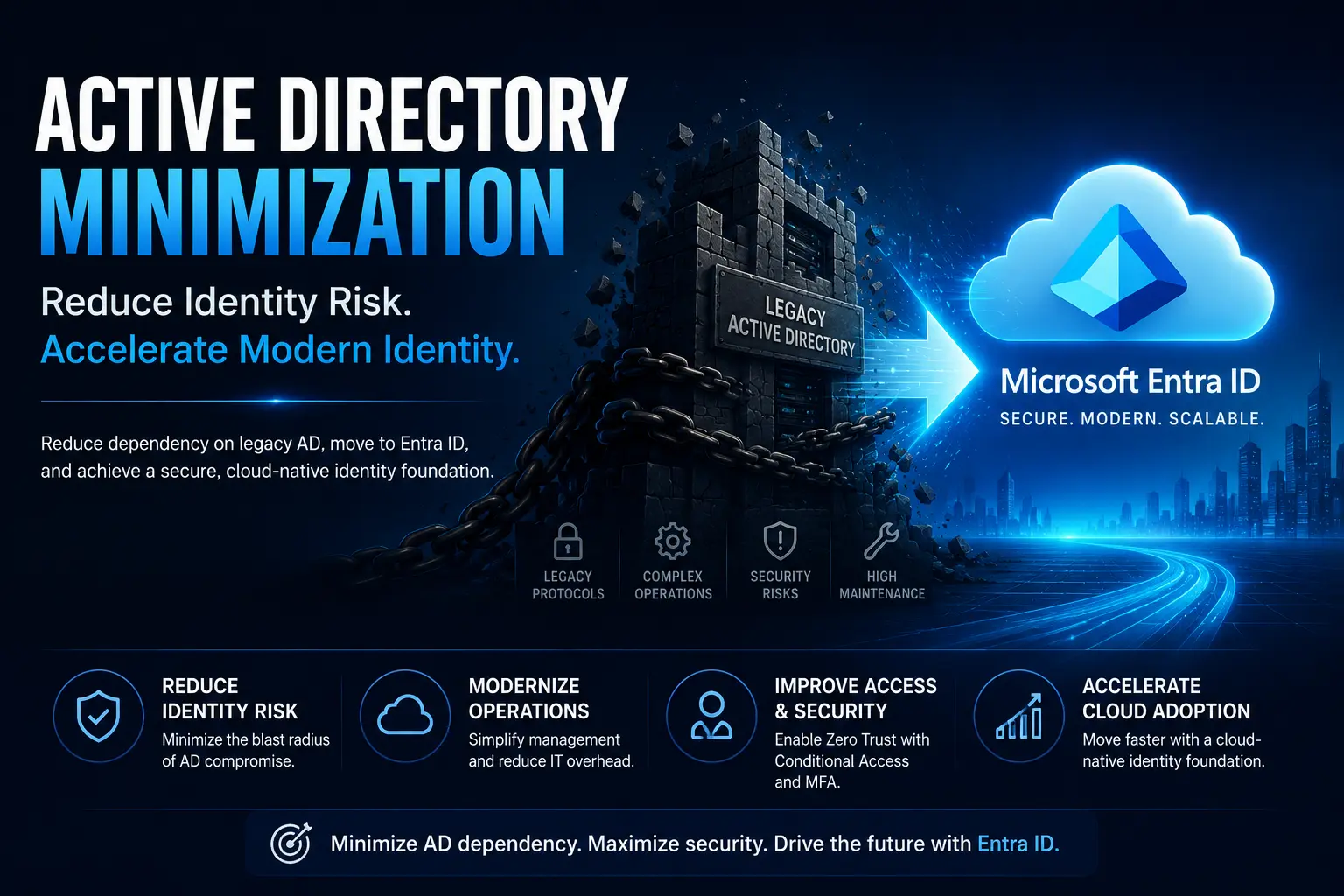
As enterprises modernize identity, endpoint management, and security architecture, legacy Active Directory (AD) increasingly becomes a source of operational complexity, security exposure, and modernization friction.
The goal is no longer to maintain AD forever.
The goal is to reduce dependency on it safely.
Why Active Directory Minimization Matters
For years, Active Directory sat at the center of enterprise IT.
It handled:
- User authentication
- Device join
- Group Policy
- File share access
- Legacy application authentication
That model worked when:
- users operated inside office networks
- VPN was acceptable
- LAN trust boundaries existed
That world has changed.
Modern enterprises now operate across:
- SaaS applications
- Hybrid workforces
- Public cloud infrastructure
- Mobile endpoints
- M&A transitions
- Distributed device fleets
Keeping legacy AD at the center of this environment creates serious long-term risk.
The 3 Biggest Problems with Legacy AD Dependency
1. Security Concentration Risk
Legacy AD relies heavily on:
- Kerberos
- NTLM
- LDAP
These protocols remain common attack paths for:
- Pass-the-Hash attacks
- Kerberoasting
- Golden Ticket abuse
- Lateral movement
When the entire enterprise depends on AD, compromising a Domain Controller can quickly become an enterprise-wide security incident.
2. Operational Complexity
Organizations continue maintaining:
- Domain Controllers
- Entra Connect sync infrastructure
- Complex GPO environments
- Machine-tunnel VPN dependencies
…simply to preserve legacy architecture.
This increases:
- infrastructure overhead
- management complexity
- support burden
3. Modernization Friction
Even when organizations adopt:
- Microsoft Entra ID
- Microsoft Intune
- Conditional Access
- Zero Trust principles
…legacy AD often remains the invisible anchor slowing everything down.
Provisioning becomes harder.
Device lifecycle management becomes fragmented.
Cloud transformation loses momentum.
What Active Directory Minimization Actually Means
AD minimization does not mean deleting Domain Controllers overnight.
It means intentionally reducing:
- systems dependent on AD
- workflows tied to legacy identity
- privileged exposure
- synchronization dependency
The objective is simple:
Maintain the smallest possible AD footprint the business genuinely requires.
The 3 Core Pillars of AD Minimization
1. Dependency Minimization
Reduce reliance on:
- Kerberos
- NTLM
- LDAP
- Entra Connect synchronization
- Legacy login workflows
2. Privilege Minimization
Eliminate:
- excessive admin groups
- legacy service accounts
- overprivileged access paths
- unnecessary Domain Admin exposure
3. Blast Radius Minimization
Design environments so AD compromise does not automatically compromise:
- Entra ID
- SaaS platforms
- cloud workloads
- recovery operations
A Practical Enterprise Framework for Active Directory Minimization
Successful AD minimization happens in phases.
Phase 1: Discover the AD Dependency Graph
Before reducing AD, organizations must understand exactly what depends on it.
This includes:
- user identities
- domain-joined devices
- Group Policies
- LDAP/Kerberos-based applications
- VPN dependencies
- file shares
- certificate infrastructure
Every dependency should be classified as:
- Move Now
- Move with Remediation
- Hard Blocked
Phase 2: Move Identity to Microsoft Entra ID
Organizations must stop treating AD as the primary identity layer.
This includes:
- replacing ADFS
- enabling modern authentication
- enforcing Conditional Access
- enabling MFA
- moving applications to SAML/OIDC
The front door of identity should become:
Microsoft Entra ID
Phase 3: Move Endpoint Identity to the Cloud
Many organizations keep AD alive simply because endpoints remain domain-joined.
Modernization requires:
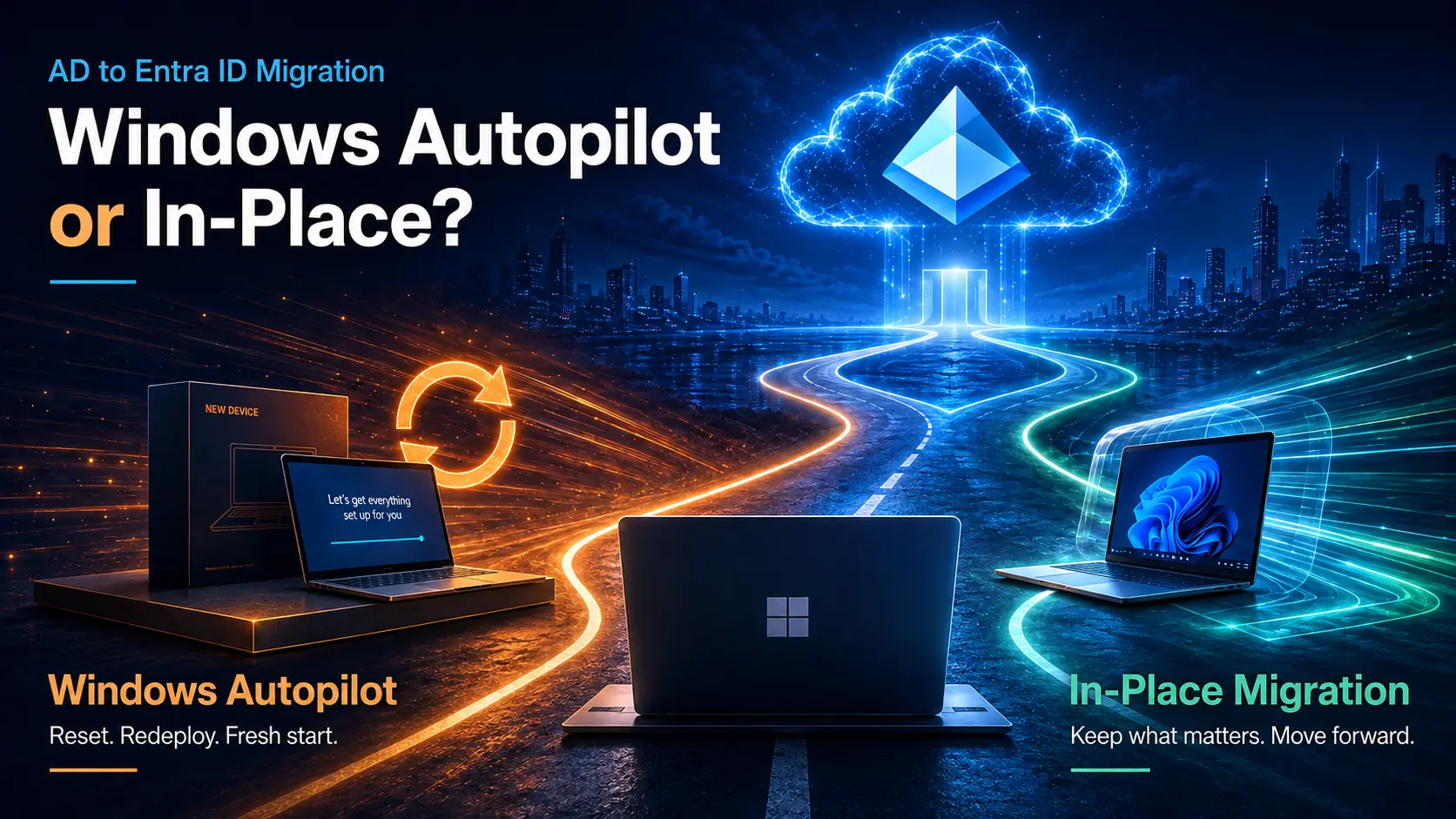
- Windows Autopilot
- Microsoft Intune
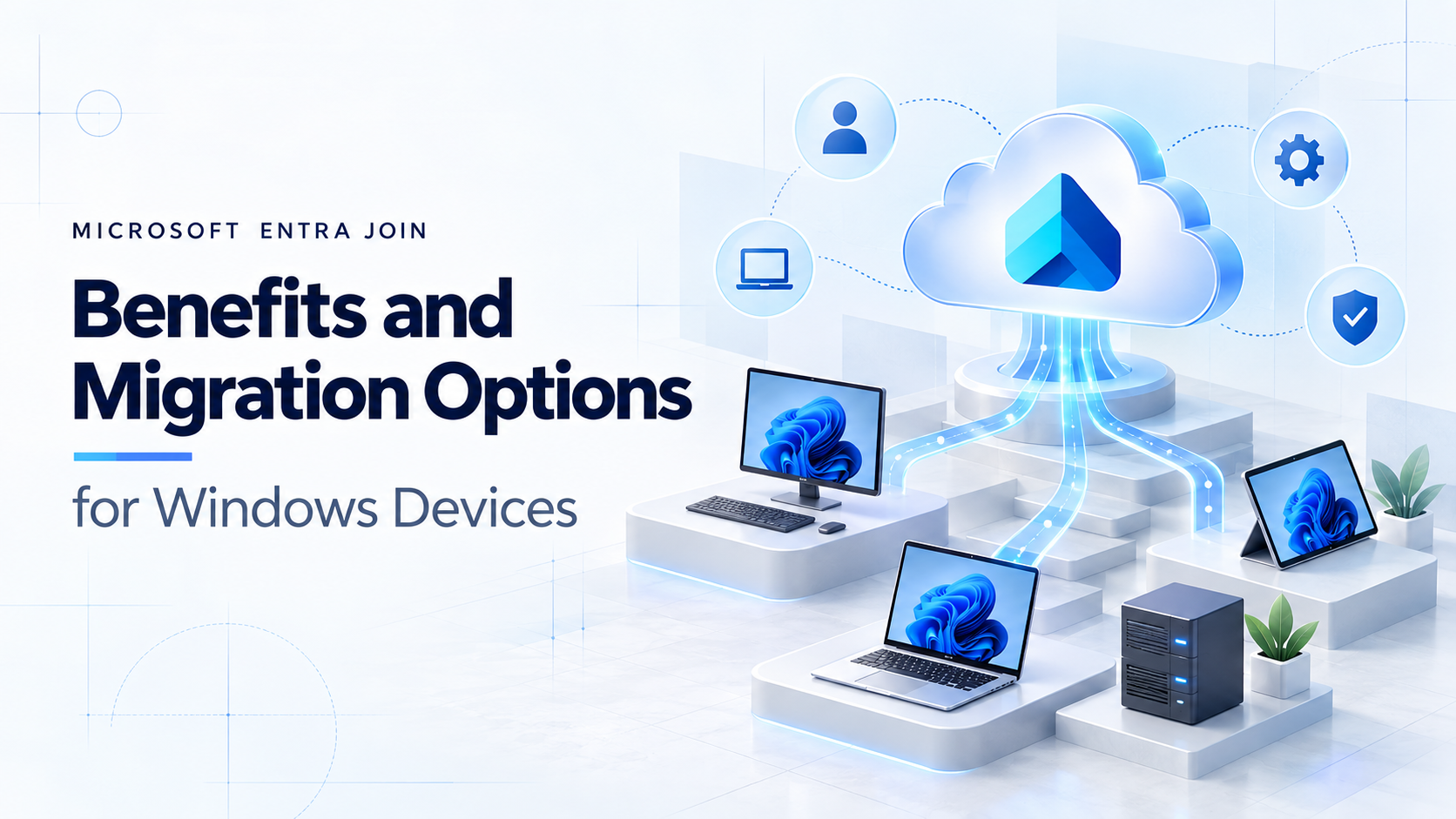
- Entra ID Join
- cloud-native device identity
This removes:
- office-bound provisioning
- GPO dependency
- VPN-heavy workflows
Phase 4: Replace Legacy Operational Patterns
True AD minimization requires replacing operational habits.
Organizations should:
- move GPOs into Intune policies
- modernize access models
- reduce dependency on domain trust
- decentralize privileged workflows
Phase 5: Eliminate Synchronization Dependency
Many “cloud-first” organizations still depend on synchronized on-prem identities.
Real minimization eventually requires:
- reducing Entra Connect dependency
- removing synchronized object reliance
- establishing Entra ID as the primary identity source
Real-World Examples of AD Minimization
We Are Era
Reduced infrastructure cost by 70% after eliminating:
- legacy Domain Controllers
- Exchange infrastructure
- ADFS dependencies
NTT Communications
Migrated 40,000 devices from Hybrid Join to Entra ID Join within four months using Intune and Autopilot.
Chugai Pharmaceutical
Enabled fully remote provisioning with Intune and Windows Autopilot for more than 10,000 Windows endpoints.
Metrics That Actually Matter
Successful AD minimization should measure:
- % of Entra ID-first authentication
- % of Entra ID Joined devices
- Number of LDAP/Kerberos-dependent applications
- Remaining Group Policies
- Number of synchronized objects
- Reduction in privileged AD accounts
Why Most Active Directory Minimization Projects Stall
Most organizations understand the strategy.
But execution becomes the problem.
The hardest challenge is:
How do you move thousands of real devices from legacy AD to Entra ID without:
- wiping endpoints
- rebuilding devices
- disrupting users
- flooding the helpdesk
Where Opsole Migrate Fits
This is where Opsole Migrate becomes critical.
Opsole Migrate is built specifically for the execution layer of Active Directory minimization.
It helps enterprises transition:
- Domain Joined devices
- Hybrid Joined endpoints
- legacy operational models
…toward native Entra ID environments safely and at scale.
With Opsole Migrate, enterprises can:
Perform Zero-Wipe Migration
Move devices to Entra ID without destructive wipe-and-load processes.
Preserve User Profiles
Maintain:
- desktop personalization
- browser continuity
- application settings
- local data
- Wi-Fi and VPN configurations
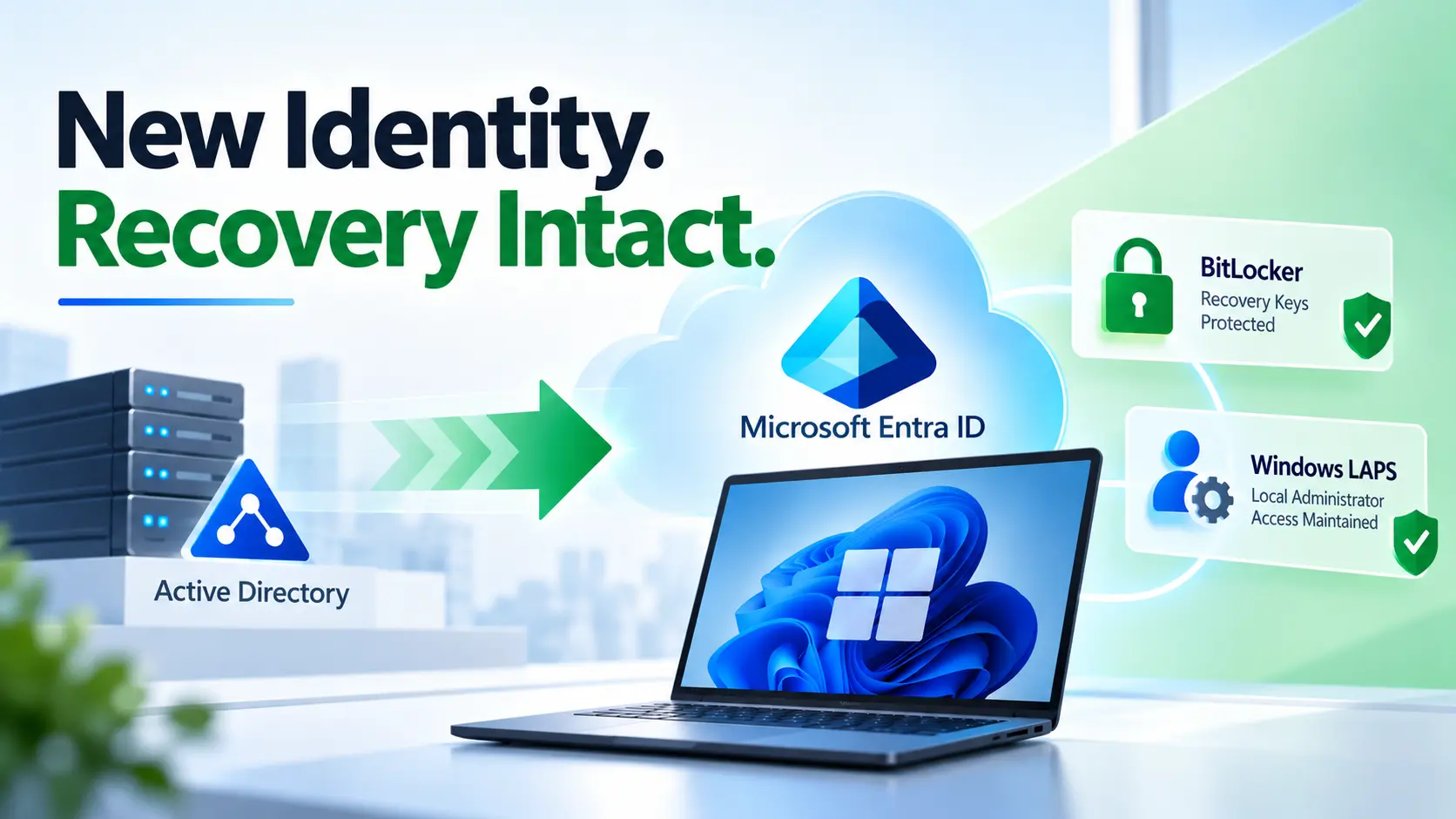
Protect Security & Compliance
Automatically back up:
- BitLocker recovery keys
- local admin credentials
- LAPS information
Enable Remote Self-Service Migration
Allow users to migrate devices securely over the internet without onsite IT support.
Execute Controlled Rollouts
Manage migrations using:
- deployment rings
- readiness validation
- centralized dashboards
- wave-based orchestration
Frequently Asked Questions
What is Active Directory minimization?
Active Directory minimization is the process of reducing how much of the organization depends on on-prem Active Directory infrastructure.
Why is AD minimization important?
Reducing AD dependency improves security, reduces operational complexity, and accelerates cloud-native modernization.
Can organizations eliminate AD completely?
Some can, but most enterprises follow a phased minimization strategy where only necessary legacy dependencies remain.
What is the biggest challenge in AD minimization?
Migrating existing domain-joined devices and operational workflows without disrupting users or business operations.
How does Entra ID support AD minimization?
Microsoft Entra ID enables cloud-native authentication, Conditional Access, modern device identity, and reduced dependency on legacy AD infrastructure.
Final Thoughts
The future of enterprise identity is not “more hybrid.”
It is intentional minimization of legacy identity dependency.
Organizations that continue expanding AD dependency increase:
- operational complexity
- attack surface
- modernization friction
- Domain Join is legacy
- Hybrid Join is transition
- Entra ID is the destination
The organizations that minimize AD dependency fastest will gain the strongest long-term security and operational advantage.
Ready to Reduce Active Directory Dependency?
With Opsole Migrate, enterprises can:
- execute Entra ID migration safely
- reduce legacy AD dependency
- preserve user productivity
- modernize endpoint identity at scale
Book a free assessment and accelerate your Active Directory minimization strategy.